
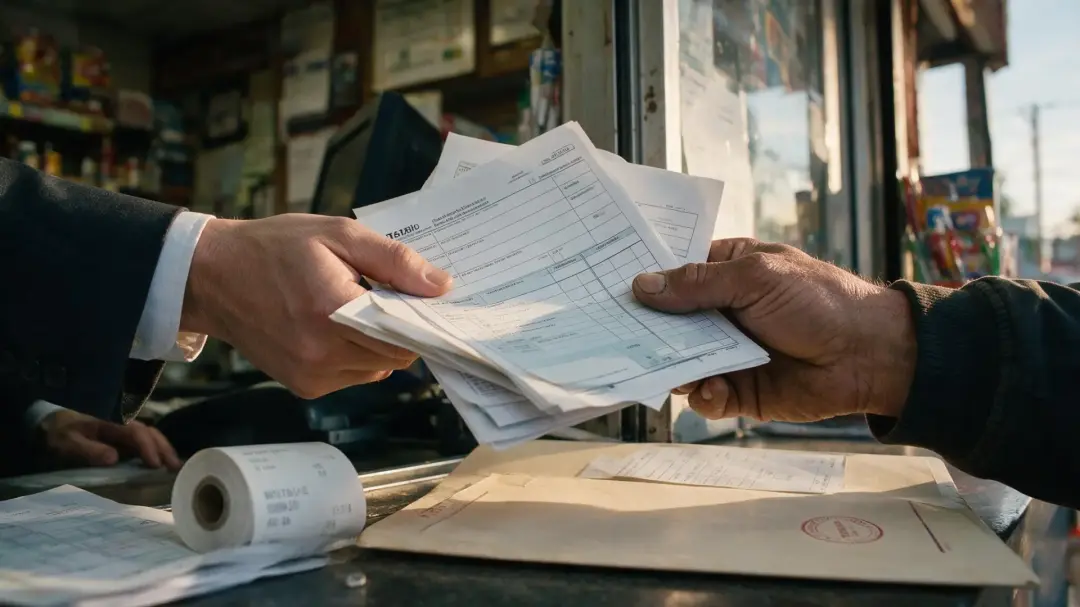
Want to make tax return season less stressful? Our guide helps you prepare early, keep good records, and meet deadlines easily: saving you time and hassle.
Making Your Tax Returns Less Stressful
Tax return season can feel stressful when records are missing, deadlines are getting closer or you are unsure how much tax you will need to pay. However, much of that pressure can be reduced by starting early and breaking the job into smaller steps.
For the 2025 to 2026 tax year, which ran from 6 April 2025 to 5 April 2026, online Self Assessment returns can be submitted from 6 April 2026 until 31 January 2027. Using those months to prepare rather than waiting until January can make the process much easier.
Why Do So Many People Find Tax Returns Stressful?
A tax return can involve gathering information from several places, checking income and expenses, understanding what can be claimed and working out how much money needs to be set aside. It becomes more difficult when all of these jobs are left until the deadline is close.
Recent figures show just how many people still leave filing until the final day. More than 11.48 million people submitted their 2024 to 2025 Self Assessment returns by 31 January 2026, but 475,722 taxpayers filed on the deadline day itself. Of those, 27,456 submitted their return during the final hour between 11pm and 11:59pm.
The busiest hour was between 5pm and 5:59pm, when 32,982 returns were submitted. Filing earlier gives you more time to deal with missing information, questions or unexpected problems instead of trying to resolve them during the final few hours.
Start Earlier Than You Think You Need To
One of the simplest ways to reduce tax return stress is to avoid treating January as the start of tax return season. For the 2025 to 2026 tax year, returns could be submitted from 6 April 2026, almost ten months before the main online filing deadline.
Many taxpayers are already taking this approach. A record 737,891 people submitted their 2025 to 2026 Self Assessment return during April 2026. Of those, 298,905 filed between 6 and 12 April, while 86,270 completed their return on 6 April itself.
You do not necessarily need to file as soon as the tax year ends, but starting your preparation several months before the deadline gives you time to find missing documents, check figures and understand your tax bill.
Check Whether You Actually Need to Complete a Tax Return
Before gathering paperwork, check whether you need to send a Self Assessment tax return at all. You will normally need to complete one if you were self-employed as a sole trader and earned more than £1,000 before expenses during the tax year. Business partners must also normally submit a return.
Other reasons can include receiving taxable income from property, savings, investments or overseas sources, or needing to report certain taxable gains. You must also complete a return if HM Revenue and Customs has asked you to do so, unless the requirement is formally withdrawn.
If your circumstances have changed, do not assume that the rules that applied last year will automatically apply again. Checking your position early can prevent unnecessary work or an unexpected registration deadline.
Put the Main Tax Return Deadlines in Your Calendar
Knowing your deadlines well in advance removes some of the uncertainty around Self Assessment. For the 2025 to 2026 tax year, people who need to register for Self Assessment for the first time will normally need to tell HM Revenue and Customs by 5 October 2026.
Most paper tax returns must reach HM Revenue and Customs by 31 October 2026. If you want an eligible Self Assessment bill collected through your tax code, your online return will normally need to be submitted by 30 December 2026.
The main online filing deadline is 31 January 2027. The balancing payment for the 2025 to 2026 tax year is also normally due by that date. If payments on account apply, the first payment is generally due on 31 January and the second on 31 July.

Create One Place for Your Tax Records
Searching through emails, drawers and bank statements in January creates unnecessary pressure. Instead, keep tax records together throughout the year.
This could include invoices, receipts, bank statements, details of business expenses, property income records and information about other taxable income. Digital copies can make documents easier to find, provided they are stored safely and clearly labelled.
If you are self-employed, you will generally need to keep your business records for at least five years after the 31 January filing deadline for the relevant tax year.
Update Your Records Little and Often
Keeping records does not need to become a large monthly job. Spending a short amount of time regularly recording income and expenses can prevent several months of paperwork building up.
For example, you could check your records against your bank statements each month, save digital copies of receipts as soon as you receive them and make sure invoices have been recorded correctly. This also makes it easier to notice missing payments or mistakes while the information is still fresh.
Good records can also make completing your return faster because you are working from organised figures rather than trying to rebuild an entire tax year from memory.
Keep Business and Personal Spending Clear
If you are self-employed, mixing personal and business spending can make tax return preparation harder. Having a clear way to identify business transactions can save time when you come to work out your income and allowable expenses.
You should keep evidence such as receipts, invoices and bank statements. Your records need to be accurate enough to show how you arrived at the figures included in your tax return.
Keeping everything organised during the year also reduces the risk of forgetting an expense or entering the same transaction more than once.
Estimate Your Tax Bill Before the Deadline
Uncertainty about the size of a tax bill can be one of the biggest causes of stress. You do not need to wait until January to find out roughly what you might owe.
Estimating your bill during the year can help you decide how much money to set aside. Once your return is completed, you will have a clearer figure and can plan how to make the payment before the deadline.
Remember that your January payment may include more than the remaining tax for the year that has ended. If payments on account apply, you may also have to make your first advance payment towards the following year's tax bill.
Consider Paying Towards Your Bill Throughout the Year
If you are up to date with your Self Assessment payments, you may be able to use a Budget Payment Plan to make weekly or monthly Direct Debit payments towards your next tax bill.
These payments reduce the amount left to pay when the deadline arrives. You can choose how much you want to pay and can pause payments for up to six months if necessary.
You will still need to pay any remaining balance by the normal deadline, so it is important to check your final bill rather than assuming your regular payments have covered everything.

Check Your Return Before You Submit It
Rushing can make simple mistakes more likely. Before submitting your return, check important figures against your records and make sure you have included all relevant sources of income.
Check that personal details are correct and review any expenses or tax relief you are claiming. If a figure looks very different from the previous year, check whether there is a clear reason.
Leaving time for this final review is another reason to avoid filing during the final hours of 31 January.
Understand the Cost of Missing the Deadline
Missing the filing deadline can add more stress and expense. A Self Assessment return submitted after the deadline can normally result in an initial £100 late filing penalty, even if there is no tax to pay.
If the return remains outstanding for three months, further penalties of £10 per day can be charged for up to 90 days, creating a possible additional charge of £900. After six months, another penalty can apply of 5% of the tax due or £300, whichever is greater. A further charge can normally apply after 12 months.
Late tax payments are dealt with separately. Penalties of 5% of the unpaid tax can normally apply when a payment is 30 days, six months and 12 months late, and interest can also be charged.
If You Cannot Pay, Deal With It Early
Completing your tax return and paying the bill are separate responsibilities. If you know you will struggle to pay the full amount, it is still important to submit the return on time where possible.
Depending on your circumstances, you may be able to arrange a payment plan for overdue tax and pay what you owe in monthly instalments. The sooner you understand what you owe, the more time you have to consider the options available.
Ignoring the bill can allow interest and penalties to build up, so dealing with a payment problem early is usually less stressful than waiting for further notices.
Be Aware of Making Tax Digital for Income Tax
Tax record keeping is also changing for some sole traders and landlords. From 6 April 2026, people within the rules whose total qualifying annual income from self-employment and property is more than £50,000 must use Making Tax Digital for Income Tax.
This involves keeping digital records using suitable software and sending updates during the year. The rules are being introduced in stages. The threshold is due to fall to more than £30,000 from 6 April 2027 and more than £20,000 from 6 April 2028.
If these rules apply to you, getting your record-keeping system organised now can make both ongoing reporting and the end-of-year tax process easier.
Give Yourself Time to Ask for Help
Some tax returns are straightforward, while others involve several types of income, property, investments or more complicated business records. If you are unsure about what needs to be reported, asking for help before the deadline gives you more time to resolve the issue properly.
Professional support may also be useful if your records have become difficult to manage, your circumstances have changed or you simply want someone to prepare and check the return for you.
Leaving questions until late January limits the amount of time available to find documents and correct problems, so raise anything you are uncertain about as early as possible.
A Simple Routine Can Make Tax Return Season Easier
A less stressful tax return normally starts long before the filing deadline. Keep records throughout the year, check whether Self Assessment applies to you, note important dates and estimate your bill early enough to plan for it.
The latest filing figures show that hundreds of thousands of people are already choosing to submit soon after the tax year ends. You do not need to be that early, but giving yourself several months instead of several days can make a major difference.
Tax rules and individual circumstances can change, so check the latest guidance before making decisions about your return, particularly if your income or working arrangements have changed.
Preparing your tax return does not have to become a last-minute task. Keeping organised records and dealing with questions early can make the process easier and give you a clearer idea of what you need to pay.
If you would like professional support with preparing and submitting your Self Assessment tax return in Wakefield and West Yorkshire, help is available.